Describe How You Can Avoid Spreading Invasive Plant Species.
Prevention
End the Spread
We accept all heard the famous phrase, "An ounce of prevention is worth a pound of cure". This phrase rings especially true in preventing the introduction and spread of invasive species in our national parks. There are a multifariousness of uncomplicated steps a visitor can take to ensure that they are non transporting invasive species into, around, or out of a park. Listed beneath are some tips to help prevent the spread of invasive species to our national parks.
-
Don't permit it loose! Do no further damage by not releasing your pets into the wild or dumping aquariums or bait buckets into waterways. Unused bait should exist discarded into trash cans.
-
Make clean, Drain, Dry. Thoroughly rinse your gear and pressure level wash your boats, skis, and other recreation vehicles on site. Plants and aquatic organisms can get into any place water tin can get into. Use hot water if bachelor. Learn how to clean, drain, and dry.
-
Don't keep invasive species as pets and don't choose invasive species for your landscaping.
-
Wash your vehicle, especially if you accept been driving on unpaved roads or off road. Plant materials tin get stuck in your tires and undercarriage. This includes cars, bikes, and ATV's.
-
Shake out your tent, camp chairs, sleeping bags, and other camp accessories before leaving the campsite to remove whatsoever constitute or seed materials.
-
Brush off or launder your pets; if they have been out romping in the parks. Mucilaginous seeds can hitchhike on their fur.
-
Clean your shoes or boots by knocking dirt and constitute materials out of the treads. Consider carrying a kicking brush in your car or pack. Rinse the soles if possible. ( Don't forget to Play, Clean, Become!)
-
Wear short gaiters to encompass your socks and pant bottoms. This will foreclose glutinous seeds, such as cheat grass, from getting stuck in your socks.
-
Don't move firewood. Use local firewood. Do not bring in firewood from outside the firsthand area. (Cheque park websites for specific instructions).
-
Use weed free feed if possible when using pack animals, such every bit horses, mules, and cattle, prior to and during, y'all visit. Contact the park y'all volition be visiting to see if they have a list of local vendors of weed seed free feed.
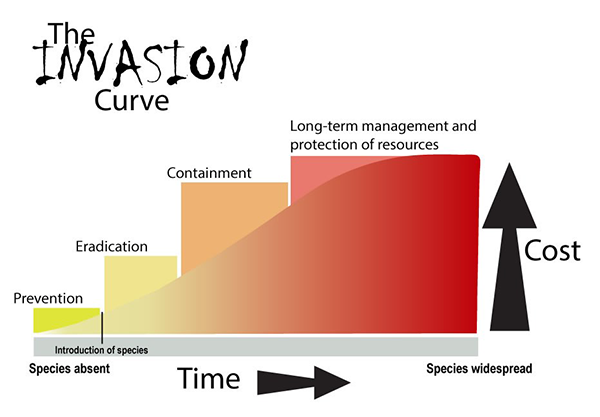
The invasion curve is adjusted from Invasive Plants and Animals Policy Framework, Country of Victoria, Section of Master Industries, 2010. NPS Graphic/Southward. Sparhawk.
Early on Detection and Rapid Response
Early Detection and Rapid Response (EDRR) ways locating invasive species just as they are first to invade a item surface area and chop-chop treating the new infestation. This concept is cardinal to effective invasive species management.
Early identification and handling makes successful control more than probable and can save critical funding and resources for the park. EDRR relies upon a potent communication network and the educational activity of visitors, neighbors, and employees about potential invaders.
EDRR is illustrated in the invasion bend (left). If an invasive plant or animal species is not detected and recoved early, expensive and long-term direction may be unavoidable.
Documents Open for Public Review
There are currently no projects with documents open up for public review related to invasive brute species, invasive constitute species, or non-native resource.
Other Plans and Projects
A list of park projects without documents open for review may be found at https://parkplanning.nps.gov/.
Last updated: April 12, 2021
barnestharbooked53.blogspot.com
Source: https://www.nps.gov/subjects/invasive/prevention.htm
0 Response to "Describe How You Can Avoid Spreading Invasive Plant Species."
Post a Comment